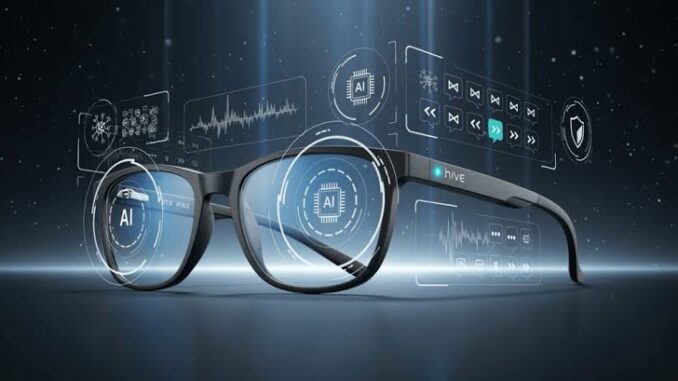
For over fifteen years, the glass rectangle of the smartphone has dominated personal computing. However, staring down at handheld screens creates constant friction with the physical environment. In 2026, wearable augmented reality (AR) glasses have reached a tipping point, moving from niche developer gadgets to mainstream consumer accessories.
Advances in waveguide display optics, spatial audio, and low-power on-device AI have allowed tech manufacturers to fit rich digital experiences into lightweight, everyday eyeglass frames.
Breaking Free from Handheld Screens
Unlike heavy virtual reality headsets, modern AR smart glasses are designed for continuous daily wear. Weighing under 60 grams, these devices project high-definition heads-up information directly onto the user’s field of vision without obstructing the real world.
Key features transforming everyday interaction include:
-
Contextual Navigation: Directional arrows and venue markers overlaid directly onto sidewalks and city roads.
-
Real-Time Translation: Live subtitles appearing in the visual field when conversing in foreign languages.
-
Hands-Free Productivity: Floating digital displays for viewing notifications, messages, and document previews without taking out a phone.
The Convergence of Spatial Audio and Multimodal AI
Visual displays are only half of the modern wearable experience. Embedded micro-speakers and directional microphones allow users to interact with AI assistants using voice or subtle hand gestures. Multimodal AI camera systems can analyse the physical surroundings—identifying landmarks, reading foreign signs, or describing physical objects instantly.
Rather than interrupting reality, technology now augments physical surroundings in real time.
The Future of Human-Computer Interaction
While smartphones remain central hubs for heavy processing and storage, smart glasses are rapidly capturing screen time for everyday tasks. As displays become clearer and battery efficiencies improve, wearable computing is proving that the future of technology isn’t held in your hand—it is seen through your eyes.
Leave a Reply